Train Crash in Spain
Train Crash in Spain
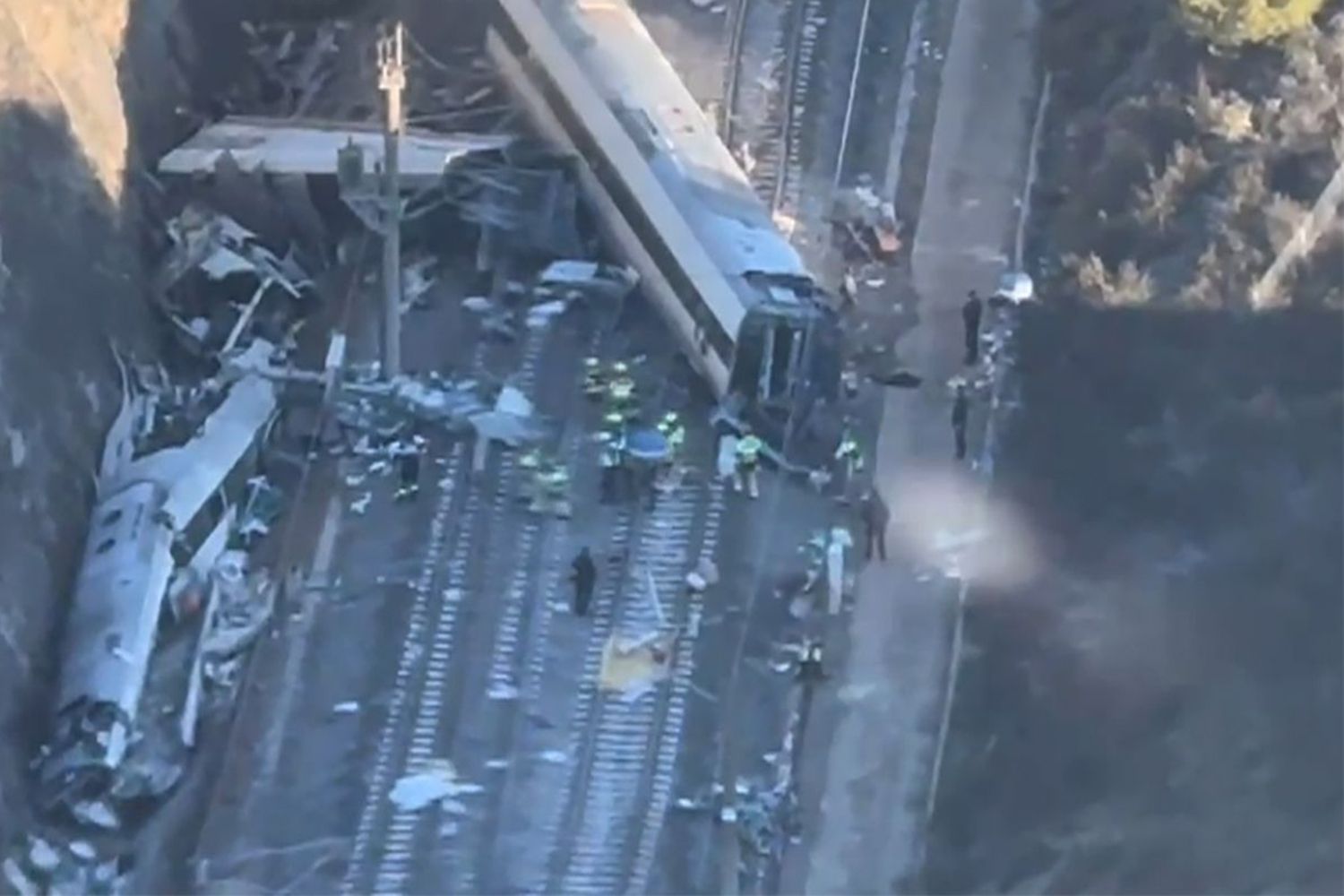
At approximately 7:43 p.m. local time, a high-speed passenger train operated by the private company Iryo, traveling from Málaga to Madrid with around 289 passengers on board, suffered a catastrophic derailment near the small municipality of Adamuz in the province of Córdoba, southern Andalucía.
The incident unfolded in a terrifying sequence over just 20 seconds. The last three carriages of the Iryo train jumped the tracks on a straight section of the Madrid-Seville high-speed line, veering into the opposite direction. Almost immediately, they collided head-on with an oncoming Renfe Alvia train heading from Madrid to Huelva, carrying about 184 passengers. The impact was brutal: the front two carriages of the Alvia train were knocked off the tracks and tumbled down a roughly 4-meter (13-foot) embankment, while the derailed Iryo cars crumpled into twisted metal. Emergency responders described scenes of chaos, with survivors recounting screams, bloodied carriages, and passengers thrown from the wreckage as the trains tore apart.
Rescue operations continued through the night and into the following days, with teams working under floodlights to extract trapped victims from the mangled debris. The final death toll reached 46, making it Spain's deadliest rail accident since the 2013 Santiago de Compostela derailment and one of the most severe in the nation's modern history. An additional 292 people were injured, including 15 in critical condition, overwhelming local hospitals as ambulances streamed in from across Andalucía.
Investigators from Spain's Railway Accident Investigation Commission (CIAF) quickly focused on the track itself at kilometer point 318. Evidence pointed to a fracture or broken weld in the rail--possibly a defect where sections from different eras (one dating to 1989 and another more recent) met--causing an abrupt step that derailed the train's wheels. Marks on the bogies of the first several Iryo carriages appeared consistent with striking such a break. The line had undergone renovations in 2025, but questions arose about maintenance protocols, prior incidents on the route, and whether inspections had caught emerging flaws.
The disaster has shaken national pride in Spain's extensive high-speed rail network, the longest in Europe, and sparked widespread grief. King Felipe VI and Queen Letizia visited the site, and the government declared three days of national mourning. Authorities announced €20 million (about $24 million) in initial compensation for victims and families. The crash also triggered broader safety concerns, contributing to reduced speed limits on parts of the network, service disruptions, and even a nationwide train drivers' strike in early February as unions demanded better safeguards amid a string of incidents that month.
As investigations continue into February 2026, with some reports of irregularities in evidence handling at the scene, the Adamuz tragedy serves as a stark reminder that even world-class infrastructure demands constant vigilance to prevent such heartbreaking loss.